Blokeak egiteko makina guztiz automatikoa
1 erakusten–9 de 13 emaitzak
-

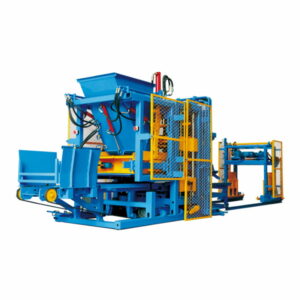
RTQT6-15 blokeak egiteko makina
-
RTQT18 Bloke Automatikoko Ekoizpen Lerroa
-
RTQT6 Hormigoizko Blokeen Ekoizpen Lerro guztiz automatikoa
-
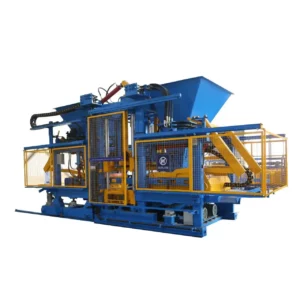
REIT RT15A Hormigoizko blokeen ekoizpen-lerro guztiz automatikoa
-
REIT RTQT9-15S Adreilua & Blokeak egiteko makina prezioa
-
REIT RT6A hormigoizko blokeak egiteko makina
-
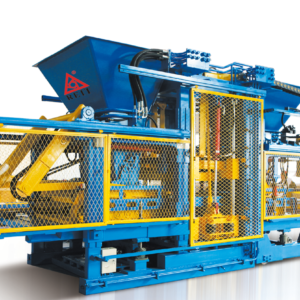
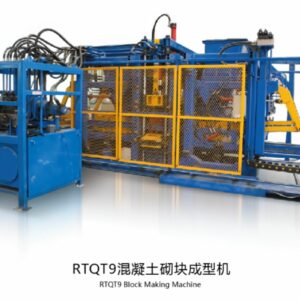
RTQT12 Blokeak egiteko makina
-
Reit hormigoizko bloke zatitzailea diseinuaren arabera adreilua zatitzeko bereziki
-
Maiztasun automatikoa hormigoizko bloke makina
Start with Your Main Concrete Products
The first step in machine selection is to identify the concrete products your factory will manufacture. Different products require different molds, molding areas and production settings. Their dimensions and structural characteristics also influence how many units can be produced in one cycle.
Hollow Concrete Blocks
Hollow blocks are widely used in residential, commercial and industrial construction. They are commonly produced in different dimensions, cavity arrangements and wall thicknesses according to local construction practices.
When selecting a machine for hollow block production, consider:
- Standard block dimensions and cavity structure
- Number of blocks produced per pallet
- Required block height and mold compatibility
- Daily demand from construction projects or building material distributors
If standard hollow blocks are your primary product, compare the molding capacity of the RTQT6, RTQT9-15S, RTQT12, RT15A and RTQT18 platforms. The appropriate choice depends on your required output and the scale of your production operation.
Solid Concrete Bricks
Solid bricks are used in construction, paving and other applications where a dense concrete product is required. Their production depends on suitable aggregate grading, concrete consistency and effective compaction.
For this product category, machine selection should focus on mold dimensions, product height, vibration performance and the required finished-product characteristics. A machine that supports multiple mold configurations can also help manufacturers respond to changes in local market demand.
Concrete Paving Blocks and Interlocking Pavers
Paving blocks are used in roads, pedestrian walkways, Aparkalekuak, industrial yards and landscaping projects. Their dimensions, patterns and surface finishes vary considerably.
For manufacturers producing decorative or colored pavers, the selection process should include more than the main molding machine. Check whether the required configuration supports a secondary distribution device or face-mix system, and confirm that the mold and concrete feeding arrangement match the intended surface design.
The RTQT12 is one model worth evaluating for this application because its product configuration includes an optional secondary distribution device for certain colored and decorative pavement products.
Curbstones and Specialized Concrete Products
Curbstones, slope protection blocks, grass-planting blocks and other infrastructure products often have dimensions that differ substantially from standard masonry blocks.
Before choosing equipment, provide product drawings or samples and confirm:
- Produktuaren gehieneko altuera
- Mold dimensions and required molding area
- Product geometry and demolding requirements
- Whether special material distribution is necessary
The RTQT12 offers a listed product height range of 50–500 mm, making it an option to evaluate for certain taller concrete products. Actual compatibility must be confirmed against the product mold and machine configuration.
Choose the Machine According to Your Production Requirements
Once your main products are defined, the next step is to match the required production volume with the machine’s molding configuration.
REIT’s automatic block making machine range includes different pallet sizes and molding quantities. For standard 400 × 200 × 200 mm hollow blocks, the listed configurations range from six blocks per pallet on the RTQT6 platform to 18 blocks per pallet on the RTQT18.
The following recommendations provide a starting point for model selection.
| Your production requirement | Models to evaluate | Key selection considerations |
| Establishing a block factory with a relatively compact production setup | RT6A / RTQT6 | Initial production target, product range, factory space and complete line investment |
| Producing standard blocks with a higher per-cycle molding quantity | RTQT9-15S / RTQT12 | Mold capacity, pallet dimensions and required hourly output |
| Manufacturing different products, including taller or specialized concrete elements | RTQT12 | Produktuaren altuera, mold compatibility and secondary distribution options |
| Expanding production for larger and more regular orders | RT15A / RTQT18 | Larger molding platform, material supply and supporting equipment capacity |
For New Factories and Controlled Initial Investment
If you are establishing a new concrete block factory, your first priority should be a production system that matches realistic market demand and available infrastructure.
The RT6A and RTQT6 are suitable starting points for comparison when evaluating a more compact automatic molding configuration. Their six-block molding arrangement for standard hollow blocks provides a reference for planning production around common construction products.
The choice between them should not be based on the model name alone. Compare the machine’s published specifications, required supporting equipment, mold options and the investment needed for the complete production setup.
- Consider the RT6A Concrete Block Making Machinewhen evaluating an economical automatic production configuration.
- Consider the RTQT6 Hormigoizko Blokeen Ekoizpen Lerro guztiz automatikoawhen comparing a compact automatic production line.
- The RTQT6-15 Block Making Machineprovides another product listing within the RTQT6 machine platform.
For Medium-Scale Production and Higher Molding Capacity
When standard block orders increase, a machine with more mold cavities can help increase the number of products formed in each cycle.
The RTQT9-15S and RTQT12 are worth comparing for manufacturers seeking a higher per-cycle molding quantity than the six-block RTQT6 configuration.
The RTQT9-15S has a nine-block molding arrangement for standard hollow blocks, while the RTQT12 accommodates 12 blocks per pallet. The RTQT12 also offers a broader listed product height range and optional secondary distribution for selected product applications.
For manufacturers producing a combination of standard blocks and other concrete products, the decision should consider both molding capacity and product flexibility.
For Large-Scale and Higher-Volume Manufacturing
Manufacturers supplying large construction projects, infrastructure contractors or established building material distribution networks may require a larger molding platform and a more comprehensive automatic production line.
The RT15A and RTQT18 offer 15-block and 18-block molding configurations respectively for standard 400 × 200 × 200 mm hollow blocks.
These models are worth evaluating when production demand justifies a larger machine configuration. Hala ere, the main machine should not be selected independently of the rest of the plant. Lote, nahastea, transmititzen, paleten manipulazioa, stacking and curing capacity must be planned to support the required production volume.
- REIT RT15A Hormigoizko blokeen ekoizpen-lerro guztiz automatikoa
- RTQT18 Bloke Automatikoko Ekoizpen Lerroa
Important: Per-pallet molding quantities are useful for comparing machine configurations, but they do not establish actual daily output. The final model recommendation should be based on the product dimensions, production cycle, effective operating hours and overall line efficiency.
Do You Need a Block Making Machine or a Complete Automatic Production Line?
This is another important decision for buyers planning a new manufacturing facility.
A block making machine performs the molding process, but continuous production requires several supporting operations. Depending on the project, buyers may purchase the main machine separately or configure a complete automatic block production line.
Main Machine Configuration
A main-machine-focused purchase may be suitable when your factory already has compatible batching, nahastea, material handling and pallet systems.
Erosi aurretik, check whether the existing equipment can meet the new machine’s requirements. Pay particular attention to:
- Concrete supply volume and mixing consistency
- Material feeding speed
- Pallet dimensions and transfer compatibility
- Automatic control and communication requirements
- Product stacking and curing arrangements
An existing production line should not be assumed compatible simply because it already manufactures concrete blocks.
Complete Automatic Production Line
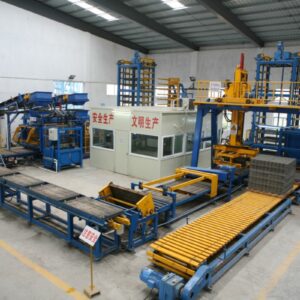
For a new factory or a major production upgrade, an integrated line can coordinate material preparation, molding and product handling.
A typical configuration may include:
| Sistema | Main function | Selection considerations |
| Raw material storage | Stores cement, aggregates and other materials | Storage volume and material delivery frequency |
| Automatic batching | Measures raw materials | Required accuracy and mix design |
| Concrete mixing | Produces uniform concrete | Mixer type, batch volume and mixing time |
| Material feeding | Transfers concrete to the machine | Supply rate and feeding consistency |
| Block molding | Forms and compacts products | Mold size, product height and molding capacity |
| Pallet handling | Transfers pallets and green products | Pallet quantity, circulation and layout |
| Automatic stacking | Arranges molded products | Stacking height and handling requirements |
| Curing arrangements | Supports concrete strength development | Curing method, space and production schedule |
| Finished-product handling | Transfers products for storage or dispatch | Product protection and logistics requirements |
Not every factory needs the same configuration. Adibidez, a plant with an existing concrete batching system may only need a new molding and handling section. A new turnkey project may require a more integrated arrangement.
The equipment configuration should therefore be determined after reviewing the factory layout, existing machinery and production objectives.
Consider Special Product Requirements and Mold Flexibility
A concrete block factory may begin with one standard product but later receive orders for different sizes, surface finishes or specialized applications. The ability to change molds and adjust the production configuration can therefore influence the long-term value of the equipment.
Standard Products with Different Dimensions
Bloke hutsak, solid bricks and paving blocks have different molding requirements. Before ordering a machine, prepare the dimensions and drawings of your main products.
Check whether the selected machine can accommodate the required mold dimensions and product height. Do not assume that every mold can be installed on every model.
Colored and Decorative Paving Products
Colored paving blocks often require a face-mix layer to create a different surface appearance from the base concrete.
If this is part of your production plan, ask whether the selected configuration supports a secondary distribution device, face-mix feeding and the required mold arrangement.
The RTQT12 product information specifically identifies a secondary distribution device for certain colored pavement and decorative products. Buyers should confirm the applicable mold and equipment configuration before placing an order.
Specialized Infrastructure Products
Slope protection blocks, dam protection products, grass-planting blocks and other specialized concrete elements may require non-standard molds or specific concrete formulations.
For these applications, product drawings and material requirements should be reviewed before machine selection. The maximum product height alone is not sufficient to establish compatibility. The molding area, product geometry, mold structure and demolding process must also be considered.
Factory Conditions That Affect Machine Selection
A machine may meet the product and output requirements on paper but still be unsuitable for a factory with insufficient space, electrical supply or material handling capacity.
Review the following conditions before confirming the machine configuration.
Workshop Layout and Installation Space
The required space includes more than the main machine footprint. Allow for batching and mixing equipment, garraiatzaileak, pallet storage, operator access, maintenance areas and finished-product movement.
The production layout should also minimize unnecessary material transfers and bottlenecks between processing stages.
Electrical Supply
Check the total installed power of the proposed production line, not only the main molding machine. Nahastailea, estazio hidraulikoa, bibrazio-motorrak, garraiatzaileak, stacking equipment and other auxiliary systems all contribute to electrical demand.
Adibidez, the RTQT18 product page lists a total installed production line capacity of 450 kW. Buyers considering this model should verify the applicable electrical requirements for their actual project configuration.
Raw Materials and Concrete Mix
The availability and characteristics of local raw materials influence production costs and product quality. Zementua, harea, aggregates and suitable industrial by-products may be considered depending on the product formulation.
Materials such as fly ash, zepa, coal gangue and tailings should not be treated as universally interchangeable. Their suitability depends on material properties, nahasketa diseinua, testing and the required finished-product performance.
Paletak, Curing and Finished-Product Storage
The molding machine can only maintain continuous production when pallets are available and molded products can be transferred to the next stage.
Insufficient pallets, curing space or finished-product storage can become production bottlenecks. These requirements should be calculated alongside the machine’s nominal molding capacity.
What Information Should You Prepare Before Requesting a Quotation?
A more accurate machine recommendation starts with project information rather than a general request for the cheapest or largest block making machine.
REIT buyers should prepare the following details where available:
| Project information | Why it matters |
| Main product types | Determines machine application and mold requirements |
| Product dimensions and drawings | Confirms mold compatibility and molding area |
| Target hourly or daily output | Helps determine the required molding capacity |
| Local raw material information | Supports batching and concrete mix planning |
| Factory dimensions | Determines equipment layout and installation feasibility |
| Electrical supply | Helps verify the complete line’s power requirements |
| Existing equipment | Determines whether a main machine or integrated line is needed |
| Future product plans | Helps assess mold flexibility and expansion options |
If you are still planning your factory, estimated product demand and available site dimensions are useful starting points. Final equipment selection can then be refined after technical review.
Maiz egiten diren galderak
Which fully automatic block making machine should I choose for a new factory?
Start with your main product, expected daily demand and available factory space. RT6A and RTQT6 can be included in an initial comparison for more compact production configurations. If you expect higher molding volumes, compare RTQT9-15S and RTQT12. Larger production requirements may justify evaluating RT15A or RTQT18. The complete line investment should be considered alongside the main machine price.
How many concrete blocks can an automatic block making machine produce per hour?
Hourly output depends on the product dimensions, number of mold cavities and actual molding cycle. A machine that produces six standard hollow blocks per cycle will have a different theoretical output from a machine producing 12 edo 18. Actual output also depends on material supply, pallet handling and production-line efficiency.
Can one automatic block making machine produce different types of concrete blocks?
Bai, compatible machines can manufacture different products by changing molds and adjusting the molding process. Hala ere, each product must be checked against the machine’s working area, product height range, mold compatibility and any special distribution requirements.
Should I purchase the main machine or a complete production line?
If you already have compatible batching, mixing and handling equipment, purchasing a main machine may be sufficient. For a new factory, an integrated production line can help coordinate material preparation, moldaketa, pallet handling and stacking. The choice depends on your existing infrastructure and project requirements.
Do I need a face-mix system for paving block production?
Not every paving block requires a face-mix system. Standard single-layer paving blocks can use an appropriate base concrete formulation. Colored or decorative paving products may require a separate face-mix process and compatible distribution equipment. Confirm the surface design and production method before selecting the machine.
Can the production line use fly ash or other industrial by-products?
Some concrete block formulations can incorporate fly ash, zepa, coal gangue and other suitable industrial by-products. Their use depends on chemical and physical properties, nahasketa diseinua, testing and the required product performance. A material assessment and production trial are recommended before confirming the formulation.
What is the most important factor when comparing automatic block making machine prices?
Compare the complete equipment configuration rather than the main machine price alone. The scope of supply, moldeak, lote eta nahasketa sistemak, paleten manipulazioa, stacking equipment, electrical requirements, installation and other project-specific items can significantly affect total investment.
Find the Right Automatic Block Making Machine for Your Project
The right automatic block making machine should match your products, ekoizpen helburuak, raw materials and factory conditions. REIT offers multiple machine configurations for manufacturers with different production requirements, from compact automatic setups to larger concrete block production lines.
Share your product dimensions, expected output and factory information with our team. REIT can help evaluate suitable machine models and supporting equipment according to your project requirements.
Contact REIT for Automatic Block Making Machine Selection and Quotation