
Abstract
Famakafakana ny tsenan'ny fanorenana eran-tany amin'ny 2025 manambara fa ny fahazoana milina fanakam-bary dia maneho ny fampiasam-bola lehibe ho an'ny orinasa any Etazonia, Kanada, Korea Atsimo, sy Russia. Ny famaritana ny vidin'ny milina biriky hollow farany dia tsy kajikajy tsotra fa fifanampiana be pitsiny amin'ny karazany maro.. Ity torolalana ity dia mandinika ireo lafin-javatra dimy lehibe izay mandidy ny vidin'ity fitaovana ilaina ity. Mitrandraka ny tontolon'ny automatique izy io, manomboka amin'ny rafitra manual mankany amin'ny rafitra mandeha ho azy tanteraka, ary ny fifandraisany mivantana amin'ny vidin'ny asa sy ny fahombiazan'ny famokarana. Fahafahana famokarana, fanamboarana bobongolo sy kalitao, lazan'ny mpanamboatra, ary ny filàna fitaovana fanampiny koa dia nozaraina. Amin'ny alàlan'ny fanombanana rafitra ireo singa ireo, Ireo mpividy dia afaka mandroso mihoatra ny mari-pandrefesana tsy misy dikany mba hahafantarana ny totalin'ny vidin'ny fananana. Ity fomba fiasa feno ity dia manome hery ny mpampiasa vola handray fanapahan-kevitra stratejika mifanaraka amin'ny tanjon'ny famokarana, famerana ny tetibola, ary tanjona ara-barotra maharitra, miantoka ny asa mahasoa sy maharitra.
Fitaovana fanalahidy
- Ny haavon'ny automatique dia misy fiantraikany mivantana amin'ny vidiny voalohany, filàna asa, ary tombony maharitra.
- Match the machine's production capacity to your specific business plan and market demand.
- Ny kalitaon'ny bobongolo sy ny versatility no zava-dehibe indrindra amin'ny fahasamihafan'ny vokatra sy ny faharetan'ny asa.
- Ny vidin'ny milina biriky hollow voalohany ambony dia matetika mampiseho ireo singa sy fanohanana ambony.
- Ny anton'ny fitaovana fanampiny sy ny fandaniana amin'ny asa ho an'ny totalin'ny fampiasam-bola marina.
- Tombanana ny fanohanana aorian'ny varotra, satria misy fiantraikany be eo amin'ny saram-pikarakarana maharitra.
- Misy fiantraikany amin'ny lozisialy ny toerana misy anao, fenitry ny fanarahan-dalàna, ary ny saran'ny tetikasa amin'ny ankapobeny.
Fizahan-takelaka
- Fahatakarana ny fampiasam-bola: Fijery fototra amin'ny milina Hollow Block
- Factor 1: Ny Spectrum of Automation sy ny fiantraikany amin'ny vidiny
- Factor 2: Fahaiza-mamokatra—Fampitomboana ny asanao sy ny teti-bolanao
- Factor 3: Ny bobongolo sy ny fahaiza-manao samihafa—Ny endriky ny fampiasam-bola
- Factor 4: Ny sanda tsy hita maso—Marika, kalitao, ary fanohanana aorian'ny varotra
- Factor 5: Fitaovana fanampiny sy ny saran'ny fampandehanana—Ny totalin'ny vidin'ny fananana
- Hevitra isam-paritra: Fomba fijery manerantany momba ny vidiny sy ny tsena
- Fanapahan-kevitra amin'ny 2025
- FAQ: Famaliana ny Fanontanianao
- Famaranana
- References
Fahatakarana ny fampiasam-bola: Fijery fototra amin'ny milina Hollow Block
Alohan'ny ahafahantsika mifandray tsara amin'ny nuance izay mamaritra ny vidin'ny milina biriky, tsy maintsy mametraka ny fahatakarana iombonantsika voalohany amin'ny tanjon'ny famotopotorana isika. Inona no atao hoe hollow block, ary nahoana no lasa ivon'ny fanorenana maoderina ny milina mamokatra azy? Eritrereto ity fikarohana voalohany ity fa tsy fiviliana fa fametrahana fototra ilaina, mitovy amin'ny fototra simenitra amin'ny trano iray. Raha tsy misy io fototra io, tsy hisy fitoniana ny rafitra ara-bola sy ara-teknika atrehintsika eo amboniny.
Inona no atao hoe hollow blocks ary nahoana izy ireo no zava-dehibe?
Ny bozaka betonona hollow dia singa masonry izay misy void na cores lehibe iray na maromaro. Ireo cores ireo dia tsy kisendrasendra; Izy ireo dia natao iniana natao hampihenana ny lanjan'ny sakana amin'ny ankapobeny nefa tsy mampandefitra ny fahamarinan'ny rafitra ho an'ny ankamaroan'ny fampiharana.. Ny voids koa dia manome insulation mafana sy acoustic tsara. Ny rindrina vita amin'ny bloc hollow dia hitazona trano iray ho mangatsiaka kokoa amin'ny fahavaratra ary mafana kokoa amin'ny ririnina raha oharina amin'ny trano mafy orina., mitarika amin'ny fitsitsiana angovo mandritra ny fiainan'ny rafitra (Keralam, 2023). Ny lanjan'izy ireo maivana koa dia midika ho mora kokoa amin'ny fikarakarana eo amin'ny toeram-panorenana, mihena ny harerahana miasa, ary ambany kokoa ny saram-pitaterana.
Alaivo sary an-tsaina ny manainga mafy, vato mikitroka mifanohitra amin'ny fanandratana sakana novolavolaina tsara miaraka amin'ny atiny poakaty. Ity farany dia mamela haingana kokoa, asa mahomby kokoa. Io fahaiza-manao io no antony voalohany mahatonga ny lazan'izy ireo amin'ny tsena samihafa, manomboka amin'ny trano fonenana any Amerika Avaratra ka hatramin'ny tetikasa fotodrafitrasa lehibe any Azia sy Eoropa Atsinanana. Ny fitakiana ireo sakana ireo no fototry ny tsena manontolo amin'ny milina horesahina. Ny milina hollow block dia tsy fitaovana fotsiny; izany dia vavahadin'ny famokarana iray amin'ireo fitaovana fanorenana maro be amin'izao androntsika izao.
Ny Anatomy amin'ny milina hollow block
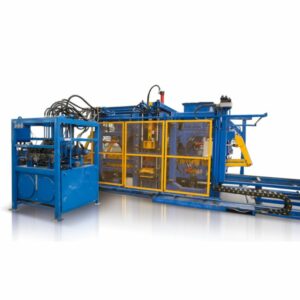
Mba hankasitraka ireo lafin-javatra izay misy fiantraikany amin'ny vidin'ny milina biriky, tsy maintsy alaina sary an-tsaina ny milina ho toy ny rafitra misy ampahany mifamatotra, ny tsirairay dia mandray anjara amin'ny fandaniana sy ny asany farany. Tsy mitovy amin'ny fitaovana tsotra izy io ary mitovitovy amin'ny zavamananaina be pitsiny izay manana tanjona ny taova tsirairay. Ny milina fanaovana Block mahazatra dia ahitana subsystems fototra maromaro.
Ny voalohany dia ny batching sy mixing plant. Eto no manomboka ny fomba fanamboarana. Akora - simenitra, fasika, vatokely, rano, ary indraindray ny additives toy ny lavenona—dia refesina tsara sy afangaro mba hamoronana fifangaroan'ny simenitra homogene mifanaraka amin'ny tokony ho izy.. Ny kalitaon'ity dingana voalohany ity dia mamaritra ny kalitaon'ny sakana farany.
Manaraka, Ny rafitra conveyor dia mitondra ny fangaro simenitra efa voaomana ho any amin'ny milina lehibe. Mety ho toy ny singa tsotra izany, fa ny fahatokisana azy no zava-dehibe indrindra amin'ny fitazonana ny fikorianan'ny famokarana mitohy.
Ny fon'ny rafitra no tena milina mamorona. Eto, arotsaka ao anaty lasitra ny beton. Ny milina avy eo dia mampiasa ny fitambaran'ny vibration avo lenta sy ny hydraulika compaction mba hamoronana ny sakana. Ny hamafin'ny fihovitrovitra sy ny herin'ny milina fanaovan-gazety hydraulika dia famantarana lehibe amin'ny fanatanterahana izay manasaraka ny milina avo lenta amin'ny kely kokoa.. Io no dingana izay tena manaporofo ny hasarobidin'ny milina fanaovana bloc Concrete.
A PLC (Mpanara-maso Logic programmable) unit miasa ho atidoha ny fandidiana. Ity dia solosaina indostrialy be pitsiny izay mifehy ny filaharana manontolo, manomboka amin'ny fampifangaroana ka hatramin'ny famolahana mankany amin'ny palletizing. The sophistication of the PLC system is a major determinant of the machine's level of automation and, Noho izany, ny vidiny.
Farany, tobim-piantsonana hydraulika iray no manome ny hery ho an'ny fizotry ny fametahana, fa ny stacker na palletizer dia mandamina ho azy ireo sakana vao vita amin'ny pallets, manomana azy ireo amin'ny dingan'ny fanasitranana. Ny tsirairay amin'ireo singa ireo dia azo alaina avy amin'ny mpamatsy samihafa miaraka amin'ny haavon'ny kalitao samihafa, izay hojerentsika any aoriana ho toy ny vidin-javatra fototra.
Avy amin'ny akora ka hatramin'ny vokatra vita: Ny dingana fanaovana bloc
Let's walk through the journey of a single hollow block. Izy io dia manomboka amin'ny fampifangaroana akora voalamina tsara ao anaty mixer. Indray mandeha tonga lafatra "zero-slump" azo atao ny tsy miovaova, Ny fangaro dia mandeha amin'ny fehikibo conveyor ary apetraka ao amin'ny hopper amin'ny milina lehibe. The machine's feeding system then evenly distributes the material into the mold cavity below.
Ny majika dia mitranga avy eo. Ny boaty bobongolo dia mihovotrovotra matetika rehefa midina ny lohan'ny milina hydraulika, fametahana ny fitaovana amin'ny hery lehibe. Ity dingana roa-hetsika ity dia manery ny paosin'ny rivotra ary miantoka ny hakitroky sy ny tanjaka ambony indrindra. Ny tsingerina manontolo dia maka segondra vitsy monja.
Indray mandeha namorona, Ny bobongolo, ary ny takelaka pusher dia manetsika ny vaovao, "maitso" manakana avy amin'ny faritra mandrafitra ary eo amin'ny pallet famokarana. Ny stacker mandeha ho azy avy eo dia manainga ity pallet ity ary mametraka azy ao anaty vata. Ampitaina any amin'ny faritra fanadiovana ireo racks ireo, izay hipetrahan'ireo bloc mandritra ny fe-potoana—matetika 24 ny 48 ora - mba hanamafy sy hahazo hery amin'ny alalan'ny hydration. Taorian'ny fanasitranana, de-palletized izy ireo, cubed, ary voatahiry, vonona amin'ny fandefasana. Tena ilaina ny fahafantarana an'io fikoriana io satria ny dingana tsirairay dia manome fahafahana ho an'ny automatique, izay misy fiantraikany mivantana amin'ny vidin'ny milina biriky.
Factor 1: Ny Spectrum of Automation sy ny fiantraikany amin'ny vidiny
Ny haavon'ny automatique dia azo inoana fa ny singa manan-danja indrindra amin'ny vidin'ny milina biriky hollow voalohany. Rehefa mangataka quotation amin'ny mpanamboatra ianao, Ny iray amin'ireo fanontaniana voalohany hapetrany dia ny haavon'ny automatique ilainao. Ny valinteninao dia hametraka ny feo manontolo amin'ny teti-bola. Tsy safidy tsotra eo amin'ny "manual" ary "automatique"; spectrum izany, miaraka amin'ny ambaratonga tsirairay manolotra fifandanjana hafa amin'ny fandaniana renivola voalohany, ny vidin'ny asa mitohy, Famokarana famokarana, ary tsy miovaova ny vokatra.
Milina maotera sy semi-automatique: Ny teboka fidirana
Any amin'ny farany ambany amin'ny vidin'ny spectrum, Hitantsika ny milina manual sy semi-automatique. Ny milina biriky tanana no endrika fototra indrindra. Amin'ny ankapobeny dia mitaky ny mpiasa hampiditra amin'ny tanana ny fangaro simenitra ao anaty lasitra, miasa levers mba hahatonga compaction, ary esory ara-batana ireo sakana vita. Ireo milina ireo dia manana ny vidiny voalohany ambany indrindra, mahatonga azy ireo ho mahasarika ho an'ny fanombohana madinika, tetikasam-piarahamonina, na orinasa any amin'ny faritra izay ambany dia ambany ny vidin'ny asa.
na izany aza, ny vidin'ny sticker ambany dia miaraka amin'ny varotra. Miankina tanteraka amin'ny hafainganam-pandeha sy ny faharetan'ny mpandraharaha ny vokatra famokarana. Ny tsy fitovian'ny vokatra dia mety miovaova amin'ny andiany iray mankany amin'ny manaraka, ary ambony ny fitakiana ara-batana amin'ny mpiasa.
Ny dingana iray avy amin'izany dia ny milina semi-automatique. Amin'ity fanitsiana ity, ny dingana sasany dia mandeha ho azy—toy ny famahanana akora sy ny tsingerin'ny vibration/compaction—fa ny hafa kosa mbola mila fandraisana an-tanana., toy ny mamindra ny pallets amin'ny sakana vita. Ny vidin'ny milina biriky hollow ho an'ny modely semi-automatique dia avo kokoa noho ny an'ny tanana, fa manome fampisondrotana lehibe amin'ny hafainganam-pandehan'ny famokarana sy ny tsy fitoviana. Izy io dia maneho ny afovoany, safidy mety ho an'ny orinasa mitady hampitombo ny vokatra nefa tsy manolo-tena amin'ny fampiasam-bola ilaina amin'ny tsipika mandeha ho azy tanteraka.
Ny fisondrotan'ny milina fanakanana mandeha ho azy tanteraka: Ny fahombiazana sy ny vidiny
Any amin'ny faran'ny spektrum no misy ny milina fanakanana mandeha ho azy tanteraka. Ireo rafitra ireo dia mahatalanjona amin'ny injeniera indostrialy, natao ho an'ny boky avo lenta, famokarana mitohy miaraka amin'ny fanaraha-mason'olombelona faran'izay kely. Amin'ny tsipika mandeha ho azy tanteraka, ny dingana rehetra izay nolalovanay teo aloha — manomboka amin'ny fandanjana ny akora ao amin'ny toeram-pambolena ka hatramin'ny fampifangaroana, fampitana, mamorona, palletizing, ary ny fanasitranana-dia fehezin'ny rafitra PLC afovoany.
Mbola ilaina ny mpandraharaha, fa ny andraikitr'izy ireo dia miova amin'ny asa tanana ho amin'ny fanaraha-maso sy ny fanaraha-maso ny kalitao. Manara-maso ny rafitra avy amin'ny tontonana fanaraha-maso izy ireo, mitantana ny famatsiana akora, ary mitantana izay fanairana rafitra rehetra. Ny fampiasam-bola voalohany amin'ny vidin'ny milina biriky hollow mandeha ho azy dia avo be. Matetika isika dia miresaka momba ny vidiny izay mety ho imbetsaka ny an'ny milina semi-automatique.
Noho izany, nahoana ny orinasa no manao fampiasam-bola lehibe toy izany? Ny toe-karena maharitra no valiny. Mahagaga ny fampihenana ny vidin'ny asa. Ny tsipika iray izay mety mitaky mpiasa folo amin'ny fananganana semi-automatique dia mety mandeha miaraka amin'ny roa na telo fotsiny amin'ny fanamafisana mandeha ho azy tanteraka.. Ny vokatra azo dia lehibe ary, manan-danja ihany koa, mampino tsy miovaova. Ny bloc rehetra vokarina dia saika mitovy ny refy, hakitroky, ary hery, izay toerana fivarotana mahery vaika ho an'ny mpanjifanao. Ho an'ny orinasa any Etazonia, Kanada, na Korea Atsimo, izay lafo ny vidin'ny asa, ny rafitra mandeha ho azy dia matetika tsy rendrarendra fa ilaina amin'ny fifaninanana.
Famakafakana fampitahana: Automation Levels vs. ROI maharitra
Mba hahatakarana marina ny fiantraikany ara-bola, let's compare these three levels side-by-side. Alaivo sary an-tsaina hoe tompona orinasa ianao miezaka manapa-kevitra izay lalana tokony haleha. Ny latabatra tsotra dia afaka manazava tsara kokoa ny fizotran'ny fanapahan-kevitra noho ny prosa irery.
| endri-javatra | Machine Manual | milina semi-automatique | milina mandeha ho azy tanteraka |
|---|---|---|---|
| Fampiasam-bola voalohany | IVA | SALASALANY | Avo hatramin'ny Avo indrindra |
| Fangatahana asa | Avo (5-8+ MPIASA) | SALASALANY (3-5 MPIASA) | IVA (2-3 mpanara-maso) |
| Famokarana vokatra | IVA (E.g., 1,000-2,000 Blocks / andro) | SALASALANY (E.g., 5,000-15,000 Blocks / andro) | Avo (E.g., 20,000-100,000+ Blocks / andro) |
| Ny vokatra vokarin'ny vokatra | Ambany hatramin'ny antonony | antonony hatramin'ny avo | Avo be |
| Fahaizana miasa | IVA (Asa ara-batana) | SALASALANY (Fampandehanana milina) | Avo (Fanaraha-maso ny rafitra) |
| ROI maharitra | Miankina amin'ny vidin'ny asa ambany | Tsara | tsara (in high-labor-cost markets) |
As the table demonstrates, the lowest hollow bricks machine price does not always equate to the best investment. A business must project its operational costs over several years. A fully automatic machine may pay for its higher initial cost through labor savings and increased sales volume within a surprisingly short period. The calculation of Return on Investment (roy) is therefore not based on the purchase price alone but on the total economic picture over the machine's lifespan.
Factor 2: Fahaiza-mamokatra—Fampitomboana ny asanao sy ny teti-bolanao
After automation, the next major determinant of a hollow bricks machine price is its production capacity. Capacity is, simply put, the speed at which the machine can produce blocks. It is a direct measure of the machine's potential output and revenue-generating power. Choosing the right capacity is a delicate balancing act. Aiming too low means leaving potential profits on the table and being unable to fulfill large orders. Aiming too high results in an unnecessarily expensive machine that sits idle, a monument to over-investment.
Defining Capacity: Blocks isan'ora, Blocks per Day
When manufacturers talk about capacity, they use specific metrics. The most common is "blocks per cycle" or "blocks per mold." This tells you how many blocks the machine produces in a single compaction cycle. For a standard 400x200x200mm (or 8x8x16 inch) bokan-kazo, a small machine might produce 4-5 blocks per mold, while a large industrial machine might produce 12, 15, na mihoatra aza.
The second metric is "cycle time," which is the number of seconds it takes to complete one full cycle of feeding, compaction, ary demolding. This can range from 15 ny 25 seconds for robust machines.
By combining these two figures, we can calculate the theoretical hourly or daily output. Ohatra, a machine that produces 10 blocks per cycle with a 20-second cycle time can perform 3 cycles per minute (60s / 20s), na 180 tsingerina isan'ora. The hourly output would be 10 blocks/cycle * 180 cycles/hour = 1,800 Blocks isan'ora. Mihoatra ny 8 ora, that's 14,400 IORENAN'NY FANATANTERAHANA. This number is the headline figure you will see in brochures, and it has a direct and proportional relationship with the hollow bricks machine price. A machine that produces 14,400 blocks per day will be significantly more expensive than one that produces 4,000.
Small-Scale Machines: For Startups and Niche Markets
Small-scale machines are designed for entrepreneurs, small contractors, or for producing for a localized market. Their capacity might range from 2,000 ny 5,000 standard blocks per 8-hour shift. These machines are often semi-automatic, striking a balance between affordability and decent output.
The hollow bricks machine price for this category is accessible, making it an excellent entry point into the business. They require less ancillary equipment—a smaller mixer, a more modest curing area—and their power consumption is lower. The physical footprint is also smaller, which is a consideration for businesses with limited factory space.
na izany aza, their limitation is scale. They may struggle to compete for large government or commercial construction tenders that require a massive and rapid supply of blocks. They are perfectly suited for building a local brand, supplying residential projects, and establishing a foothold in the market before scaling up.
Medium-to-Large Scale Machines: Meeting Industrial Demand
This category is where the serious industrial players operate. Medium-scale machines might produce 8,000 ny 20,000 bloc isan'andro, while large-scale machines can exceed 100,000 blocks in a 24-hour operation. These are almost always fully automatic systems. A Concrete block making machine of this size is not a standalone item but the centerpiece of an entire factory.
The hollow bricks machine price escalates rapidly in this category. The machine itself is larger, built with heavier steel, and equipped with more powerful hydraulic and vibration systems to handle the larger molds and faster cycle times. Ary, the investment in required support systems is substantial. You will need a large-capacity automatic batching plant, silos for cement and fly ash, a robust block transport system (finger cart), and extensive, often climate-controlled, fandrahoan-tsakafo.
The decision to invest in a machine of this capacity must be backed by a solid business case, including secured contracts or a very clear and large market demand. It is a choice for established companies looking to expand or for well-capitalized ventures in booming construction markets like those found in parts of the United States or rapidly developing regions.
How to Calculate Your Required Capacity
Noho izany, how do you choose? This requires some honest self-assessment and market research. Do not be seduced by the biggest number. fa tsy, perform a simple thought exercise.
-
Estimate Your Market: Realistically, how many blocks can you sell per day or per month in your target area (E.g., your city, Region, or specific export market like South Korea or Russia)? Talk to local contractors, look at government infrastructure plans, and analyze your competition. Let's say you determine a realistic daily sales target of 10,000 IORENAN'NY FANATANTERAHANA.
-
Factor in Downtime: No machine runs 100% of the time. You must account for scheduled maintenance, fiovana bobongolo, and unforeseen stops. A good rule of thumb is to plan for 80% fahaiza-miasa mahomby. Noho izany, to produce 10,000 IORENAN'NY FANATANTERAHANA, you need a machine with a theoretical capacity of 12,500 bloc isan'andro (10,000 / 0.80).
-
Consider Future Growth: Are you planning to expand in the next 3-5 taona? It may be wise to invest in a machine with slightly more capacity than you need right now, perhaps a capacity of 15,000 bloc isan'andro. This provides a buffer and allows you to grow without needing a new machine immediately.
By working backward from your market reality, you can identify a capacity range that makes sense for you. This targeted range will allow you to request much more accurate quotations and compare offers on a like-for-like basis, turning a vague search for a "hollow bricks machine price" into a precise inquiry for a "15,000 block/day semi-automatic machine price."
Factor 3: Ny bobongolo sy ny fahaiza-manao samihafa—Ny endriky ny fampiasam-bola
We have discussed automation and capacity, which relate to the "how fast" and "how many" of production. Now we turn to the "what." The molds used in a block machine define the actual products you can sell. The versatility, kalitao, and quantity of these molds are a crucial component of the overall hollow bricks machine price and the future profitability of your business. To underestimate the role of the mold is to focus on the engine of a car while ignoring its wheels and steering.
The beauty of a modern Block making machine is its versatility. Amin'ny fanovana ny bobongolo fotsiny, the same machine can produce a vast array of products. One day you could be producing standard hollow blocks for walling, and the next you could be manufacturing decorative paving stones for a landscaping project. This flexibility is key to diversifying your revenue streams. A machine that can only make one type of product is at the mercy of the demand for that single item. A machine that can make many products—hollow blocks, biriky mafy, pavers mifamatotra, vato fisaka, retaining wall blocks—can adapt to the changing needs of the construction market. This makes it not just a Hollow block machine but a comprehensive precast concrete production center. The ability to switch to producing pavers, ohatra, turns it into a Paver block machine as well.
The Role of Molds in a Block Making Machine
A mold set consists of two primary parts: the mold box (the outer frame that defines the length and width of the blocks) and the tamper head (which presses down from above, forming the top surface and the internal cores). These are precision-engineered components that must withstand immense pressure and high-frequency vibration, tsingerina manaraka tsingerina.
Rehefa mividy milina ianao, it typically comes with one free mold set of your choice. Every additional mold you require will add to the total cost. The price of a single mold set can range from a few thousand to tens of thousands of dollars, depending on its complexity and quality. Ary noho izany, a business that needs to produce five different types of blocks will face a significantly higher initial investment than a business that only needs to produce one.
Material and Manufacturing of Molds: A Hidden Cost Driver
Not all molds are created equal. The price of a mold is directly related to the materials used and the manufacturing processes it undergoes. This is a detail that can be easily overlooked but has profound implications for the operational life and maintenance costs of your plant.
Lower-cost molds are often made from standard steel plates welded together. They will function, but they will wear out relatively quickly. The abrasive nature of the concrete mix will gradually erode the inner surfaces, mitarika ho amin'ny sakana tsy mifanaraka amin'ny fepetra. These molds might last for 50,000 ny 100,000 cycles before needing major repairs or replacement.
Higher-quality molds, raha lafo kokoa aloha, are a much wiser long-term investment. They are typically made from high-manganese (Mn) alloy steels. The key components are not just welded but are often machined from solid billets for greater precision. Ny zava-dehibe indrindra, they undergo specialized heat treatment processes. Carburizing, ohatra, involves infusing the surface of the steel with carbon at high temperatures, creating a super-hard, wear-resistant "case" while the core of the steel remains tough and able to absorb shock. A mold treated this way can last for hundreds of thousands, or even over a million, BISIKLETA. The difference in lifespan is enormous. When evaluating a hollow bricks machine price from different suppliers, it is vital to ask for the specifications of the molds: What steel is used? What is the hardness (HRC)? What heat treatment is applied? A cheaper quote might be hiding the use of inferior, short-lived molds.
Customization vs. Lasitra mahazatra: Balancing Needs and Budget
Most manufacturers offer a wide catalog of standard mold designs for common block and paver sizes in different regions (E.g., 8x8x16 inches in the US, 390x190x190mm in Russia and other metric markets). Opting for these standard designs is the most cost-effective approach.
na izany aza, you may have a specific need. Perhaps an architect has designed a unique, aesthetically pleasing block for a high-end project, or you want to create a proprietary paver design to differentiate your brand. In these cases, you will need a custom mold. Manufacturers can create custom molds based on your drawings and specifications. This process involves custom design, INJENIORIA, and fabrication, which naturally increases the cost and lead time. While it adds to the initial hollow bricks machine price, a successful custom product can command a premium in the market, leading to higher profit margins. The choice between standard and custom is a strategic one, weighing the cost of uniqueness against its potential market reward.
A Table of Possibilities: Common Mold Types and Their Applications
To illustrate the versatility we have been discussing, let's look at a table of common mold types and the products they create. Seeing the possibilities can help you strategize which molds are most relevant to your target market.
| Mold Type | Resulting Product | Image/Description | Common Applications |
|---|---|---|---|
| Standard Hollow Block | Hollow Masonry Unit | Rectangular block with 2 na 3 large internal voids. | General construction, load-bearing and non-load-bearing walls. |
| Interlocking Paver | Paving Stone (E.g., 'I' endrika) | Shaped blocks that fit together like puzzle pieces. | Lalambe, lalantsara, patio, industrial yards. |
| Curb Stone | Kerbstone/Curbstone | Elongated, specifically shaped blocks for road edges. | Roadways, parking lots, landscaping borders. |
| Solid Brick | Solid Concrete Brick | Ny matevina, solid rectangular block. | Facades, rindrina fisarahana, areas requiring high strength. |
| Retaining Wall Block | Segmental Retaining Wall Unit | Blocks with a lip or pin system for interlocking. | zaridaina, erosion control, creating tiered gardens. |
| Hourdi Block | Ribbed Floor Block | Lightweight blocks used in slab construction. | Used between precast beams to form a floor or roof system. |
This table shows that a single Cement machine can be a multi-faceted production tool. When planning your budget, you must consider not just the base price of the machine but also the cost of the mold portfolio you will need to effectively serve your market.
Factor 4: Ny sanda tsy hita maso—Marika, kalitao, ary fanohanana aorian'ny varotra
When comparing quotations for a hollow bricks machine price, it can be tempting to gravitate toward the lowest number. na izany aza, experienced business owners understand that the initial purchase price is only one part of the story. The long-term value of your investment is deeply tied to less tangible, but no less important, factors: the reputation of the manufacturer, the quality of the individual components that make up the machine, and the comprehensiveness of the after-sales support package. These elements constitute the "unseen value" that often justifies a higher initial price.
Why Manufacturer Reputation Matters
In the world of industrial machinery, reputation is earned, not given. It is built over years, indraindray am-polony taona, of consistent performance, technological innovation, ary ny fahafaham-po ho an'ny mpanjifa. A reputable manufacturer, such as a well-established company with a global footprint, offers a level of assurance that a newer or unknown entity cannot. Nahoana izany no tena sarobidy?
VOALOHANY, it implies reliability. A manufacturer with a long history has a proven track record. Their machine designs have been tested, fandrendrika, and improved over many production cycles in real-world factories. You are not buying a prototype; you are buying a mature technology. This reduces the risk of unexpected breakdowns and design flaws that can plague unproven equipment.
FAHAROA, it suggests expertise. An established company has a deep well of engineering knowledge. They can provide expert advice on factory layout, help you choose the right machine configuration for your specific raw materials, and troubleshoot complex operational issues. When you invest with a reputable firm, you are gaining a partner, not just a supplier.
FAHATELO, it affects resale value. Should you decide to upgrade or change your business direction in the future, a machine from a well-known brand will retain a much higher resale value than a generic or obscure one. The brand name itself is an asset. The slight premium paid for a known brand can be seen as an insurance policy against risk and a down payment on future peace of mind.
Deconstructing Component Quality: From German PLCs to Japanese Hydraulics
A hollow block machine is a complex assembly of parts, and the quality of these individual parts has a direct impact on the machine's performance, azo itokisana, and lifespan. Two machines that look similar on the outside can be vastly different on the inside. This is a primary reason for variations in the hollow bricks machine price.
Consider the PLC (Mpanara-maso Logic programmable), the machine's brain. A machine using a top-tier PLC from a brand like Siemens (Alemaina) na Mitsubishi (Japana) will be more expensive than one using a generic or lesser-known brand. The premium is for superior reliability, faster processing speeds, better diagnostics, and worldwide availability of technical support and spare parts.
The same principle applies to the hydraulic system. The hydraulic valves, mitempo manosika ny, and seals are subjected to intense and continuous pressure. Using components from respected brands like Yuken (Japana) or Bosch Rexroth (Alemaina) ensures a longer service life, less risk of oil leaks, and more precise control over the compaction process. This precision translates directly into more consistent block quality.
Even the steel used for the machine frame makes a difference. A mavesatra kokoa, more robust frame, built to a higher standard using quality steel, will better absorb the machine's intense vibrations. This leads to greater stability, less wear and tear on components, and a longer operational life. When you receive a quote, ask for a detailed component list. A manufacturer proud of their quality will be happy to specify the brands of the PLC, System hydraulic, Sela Mpandray Hafanana, and motors they use. A reluctance to provide this information can be a red flag. The higher hollow bricks machine price associated with premium components is an investment in uptime and a hedge against the high cost of downtime.
The After-Sales Service Package: Fametrahana, Training, and Spare Parts
A machine is delivered to your factory. It is a large, complex piece of steel. What happens next? The quality of the after-sales service is what separates a mere transaction from a true business partnership. This service package is a significant, though sometimes hidden, part of the overall hollow bricks machine price.
Fametrahana sy fametrahana: A good manufacturer will not simply ship you a machine in a container. They will send qualified technicians to your site to supervise the installation, connect the electrical and hydraulic systems, and perform the initial commissioning. This ensures the machine is set up correctly from day one, avoiding a host of potential future problems. This service, especially for international clients in Russia or Canada, is invaluable.
Fanofanana mpandraharaha: A Fully automatic block machine is a sophisticated piece of equipment. Your staff needs to be trained on how to operate it safely, perform routine maintenance, change molds, and troubleshoot common issues. A comprehensive training program, included in the purchase package, is vital for maximizing your machine's efficiency and minimizing operator error.
Warranty and Technical Support: What happens if a problem arises six months down the line? A strong warranty and accessible, responsive technical support are your safety net. Can you call or email a support line and get a prompt, helpful response from an engineer who speaks your language? This level of support provides immense peace of mind.
Fividianana kojakoja: All machines require spare parts over their lifetime—seals, Sela Mpandray Hafanana, vibration motors, sns. A key question to ask is: does the manufacturer maintain a stock of critical spare parts? How quickly can they ship them to your location? A low initial machine price can be quickly negated if your entire production line has to shut down for weeks while you wait for a simple part to be shipped from overseas. A reputable manufacturer understands the importance of parts logistics and will have a system in place to support their customers globally.
When evaluating the hollow bricks machine price, you must look at the total package. A cheaper offer that includes minimal support may end up being far more costly in the long run due to extended downtime, improper operation, and difficulty in sourcing parts.
Factor 5: Fitaovana fanampiny sy ny saran'ny fampandehanana—Ny totalin'ny vidin'ny fananana
A common mistake for first-time buyers is to focus exclusively on the hollow bricks machine price itself, as quoted by the manufacturer. Ity tarehimarika ity, while significant, is only one piece of a much larger financial puzzle. A Hollow block machine does not operate in a vacuum. It is the heart of a production ecosystem, and to function, it requires a host of supporting, or ancillary, equipment. koa, the ongoing operational costs will far exceed the initial purchase price over the machine's lifetime. A sophisticated investor thinks in terms of Total Cost of Ownership (TCO), a concept that provides a more holistic and realistic view of the investment.
Beyond the Main Machine: Batching Plants, Palletizers, and Curing Systems
Let's build a mental picture of a complete production line. The main forming machine sits at the center, but it is surrounded by other essential equipment. The cost of this ancillary equipment must be factored into your initial budget.
- Simenitra Silo: For any medium-to-large scale operation, buying cement in bulk rather than in bags is far more economical. This requires a cement silo for storage, complete with a screw conveyor to transport the cement to the batching plant.
- Batching Plant: This is a critical system that automatically weighs the raw materials (fasika, vatokely, simenitra, lavenona manidina) according to the pre-programmed recipe in the PLC. The precision of the batching plant directly affects the consistency and strength of your blocks. Its cost varies with its size and level of automation.
- Mixer: The batching plant feeds the materials into a concrete mixer. The type and size of the mixer must be matched to the capacity of your block machine to ensure a continuous supply of fresh concrete. Planetary mixers are often preferred for their thorough mixing action, but they are more expensive than twin-shaft mixers.
- Pallets: The fresh blocks are formed on production pallets. You will need a large number of these pallets—hundreds or even thousands—to keep the production running while other blocks are curing. The cost of these pallets (which can be made of steel, plastika, or bamboo/wood) is a significant expense.
- Stacker/Finger Cart System: Amin'ny tsipika mandeha ho azy tanteraka, a stacker or a more advanced "finger cart" system is needed to transport the pallets of green blocks to the curing area and bring back cured blocks for de-palletizing.
- Curing Room/Chamber: While not a "machine," the curing area is a vital part of the infrastructure. For consistent results, especially in climates with extreme temperatures like Canada or Russia, a closed curing chamber with steam or mist systems might be necessary to control temperature and humidity.
- Cubing/Packaging System: Taorian'ny fanasitranana, the blocks are de-palletized and stacked into cubes for shipping. An automatic cuber and a strapping/wrapping machine can further reduce labor and prepare your product for professional distribution.
The total cost of this ancillary equipment can sometimes equal or even exceed the price of the main forming machine itself. A comprehensive quotation from a manufacturer like Milina reit will often detail a complete line, providing a much clearer picture of the total upfront investment.
Raw Material Sourcing and its Economic Implications
The cost of the machine is a one-time expense. The cost of raw materials is a continuous operational expense that you will incur every single day of production. The economics of your raw material supply chain can make or break your business.
The primary ingredients are cement, fitambarana (sand and crushed stone), ary rano. The price and availability of these materials vary dramatically by region. Before investing, you must research your local sources. What is the cost per ton of cement delivered to your proposed factory site? Are there good quality sources of sand and gravel nearby, or will you have to pay high transportation costs?
Think about it this way: a block is mostly aggregate. If you have to truck in aggregate from 100 kilometers away, your cost per block will be significantly higher than a competitor who is located next to a quarry. Some businesses even vertically integrate by purchasing their own quarry to secure their aggregate supply and control costs. The efficiency of your Cement machine is irrelevant if your raw material costs are too high to be competitive.
Kajy ny vidin'ny tompony (TCO) Mihoatra ny vidin'ny vidiny voalohany
Total Cost of Ownership is a financial estimate intended to help buyers and owners determine the direct and indirect costs of a product or system. It is a management accounting concept that can be used in full cost accounting. For a block production line, the TCO can be broken down as follows:
TCO = Vidiny mividy voalohany + Lifetime Operational Costs
Where:
-
Vidim-bola voalohany = Cost of main machine + Cost of all ancillary equipment + Installation and shipping fees + Training costs.
-
Lifetime Operational Costs = (Cost of Raw Materials + Cost of Labor + Cost of Energy + Cost of Maintenance & Piesy detase + Cost of Land/Rent) * Expected Lifespan in Years.
This formula forces a long-term perspective. A machine with a lower initial price but higher energy consumption and frequent maintenance needs may have a much higher TCO than a more expensive, but more efficient and reliable, milina. A fully automatic machine requires a higher initial investment but drastically reduces the lifetime cost of labor.
When you are evaluating different hollow bricks machine price points, do not just compare the numbers on the quote. Use them to build a TCO model for each option. This data-driven approach will illuminate the true long-term financial impact of your decision and guide you toward the most profitable investment, not just the cheapest one.
Hevitra isam-paritra: Fomba fijery manerantany momba ny vidiny sy ny tsena
The world of construction is not uniform. Building codes, Vidiny miasa, climate conditions, and business practices vary significantly from one country to another. A savvy investor understands that the ideal block machine configuration and the associated hollow bricks machine price must be adapted to the specific realities of their target market. Let's examine the unique considerations for four key markets: the United States and Canada, Korea Atsimo, sy Russia.
Navigating the Market in the United States and Canada
The North American construction market is characterized by stringent regulations, high labor costs, and a strong emphasis on safety and quality. These factors heavily influence the type of machinery that is successful here.
Compliance and Certification: Equipment sold in the US and Canada must often meet specific safety and electrical standards, such as those from Underwriters Laboratories (UL) or the Canadian Standards Association (CSA). A machine that is certified or built to be compliant with these standards will command a higher price, as the certification process is rigorous and expensive for the manufacturer. Importing a non-compliant machine can lead to significant headaches, including refusal by local authorities to allow its operation.
Push for Automation: High wages for skilled and unskilled labor are a primary economic driver. This creates a powerful incentive to invest in automation. A Fully automatic block machine that can be run by a small team of supervisors is far more economically viable in the long run than a semi-automatic machine requiring a larger workforce. The higher initial hollow bricks machine price is quickly offset by substantial savings in payroll, MPIANTOKA, and benefits.
Logistics and Scale: The sheer size of the continent means that freight and logistics are a major consideration. The cost of shipping a heavy machine from an overseas manufacturer to an inland location can be substantial and must be budgeted for. North American operations often cater to a large market area, favoring high-capacity machines that can produce a large volume of blocks to justify the distribution network.
The South Korean Construction Landscape
South Korea is known for its technological advancement, high population density, and precision engineering. The construction market reflects these national characteristics.
Preference for High-Tech and Precision: South Korean buyers have a strong appreciation for high-quality engineering. They are more likely to pay a premium for machines that feature advanced technologies, such as sophisticated PLC controls, servo-vibration systems for precise control, and components from top-tier German or Japanese brands. The consistency and quality of the final product are paramount. The hollow bricks machine price is often viewed through a lens of technological capability.
Compact Footprint: In a densely populated country, industrial land can be scarce and expensive. Ary noho izany, there is a preference for machines and plant layouts that are highly efficient in their use of space. Manufacturers that can design a high-capacity production line with a compact footprint have a competitive advantage.
Aesthetics and Innovation: The South Korean market is also receptive to innovation in block design. There is a market for high-end architectural blocks and aesthetically pleasing pavers. This means that the versatility of the machine and the ability to work with high-quality, custom molds can be a key selling point.
Opportunities and Challenges in the Russian Market
The Russian market presents a unique set of challenges and opportunities, shaped by its vast geography, harsh climate, and specific economic conditions.
Robustness and Durability: The primary requirement for a Block making machine destined for Russia is robustness. The machine must be built to withstand extreme temperature variations, from hot summers to brutally cold winters. This means using high-quality steel that resists becoming brittle in the cold, as well as hydraulic and electrical systems that are rated for low-temperature operation. The machine frame needs to be exceptionally strong and heavy-duty.
Winterization Features: A significant added cost for machines in this region can be "winterization" packages. This might include heaters for the hydraulic oil tank, insulated enclosures for sensitive components, and the need for a well-designed, heated curing chamber to ensure blocks can cure properly even when outdoor temperatures are well below freezing. These features add to the complexity and the hollow bricks machine price.
Logistics and Support: Russia's vastness makes logistics a challenge. The cost of transporting a machine to a remote region like Siberia is considerable. Even more important is the availability of after-sales support. A manufacturer must have a strategy for providing technical assistance and spare parts to clients who may be thousands of kilometers from a major city. This might involve partnerships with local service agents or investing in robust remote diagnostic capabilities. The reliability of the machine is doubly important, as getting a technician to a remote site can be difficult and expensive.
In each of these markets, the "best" hollow bricks machine price is not the lowest price. It is the price for a machine that is properly specified for the unique demands of that environment. A one-size-fits-all approach is destined to fail. A wise buyer will engage with manufacturers who demonstrate an understanding of these regional nuances and can engineer a solution that is truly fit for purpose.
Fanapahan-kevitra amin'ny 2025
You have now journeyed through the core factors that shape a hollow bricks machine price. You understand the roles of automation, fahafahana, AMOLAVOLAN'I, brand quality, ary ny totalin'ny sandan'ny fananana. The final step is to synthesize this knowledge into a practical strategy for making a wise and confident investment in 2025. This is where the theoretical becomes actionable.
Developing Your Business Plan and Budget
Before you even contact a single manufacturer, the most important work happens internally. You must develop a clear and realistic business plan. This plan is your map; without it, you are navigating blind.
Your business plan should answer fundamental questions:
- What is your primary market? (E.g., residential contractors, Fotodrafitrasa momba ny governemanta, retail landscaping suppliers)
- What specific products will you sell? (E.g., standard hollow blocks, barazy mifangaro, colored pavers)
- What is your projected sales volume for the first, FAHAROA, and third years? (Be realistic, even conservative.)
- What is your competitive landscape? (Who are your competitors, and what are their prices and quality?)
- What is your budget for the entire project? This must include not just the machine but land, tranobe, ancillary equipment, initial raw material stock, and working capital.
Only when you have this clarity can you determine the right specifications for your machine. Your business plan will tell you whether you need a semi-automatic machine with a capacity of 8,000 blocks per day or a fully automatic line producing 30,000. It will dictate whether you need three mold types or seven. This internal work is the foundation of a successful purchase.
How to Request a Meaningful Quotation
Once you have your specifications, you can begin reaching out to manufacturers. A vague email saying "Please send me your hollow bricks machine price" will yield vague and unhelpful answers. To get a meaningful, comparable quotation, you need to provide detailed information. A professional request should include:
- The exact type and size of the blocks/pavers you want to produce. Include drawings or standard dimensions (E.g., 400x200x200mm hollow block with 2 cores).
- The required capacity. Specify it clearly (E.g., "approximately 12,000 pieces of 400x200x200mm blocks per 8-hour shift").
- Your desired level of automation. (E.g., "We are interested in a fully automatic line including automatic batching, stocking, and curing systems.")
- Information about your factory site. A simple layout drawing showing the available space is incredibly helpful for the manufacturer to propose a suitable plant layout.
- Information about your local raw materials. (E.g., "Our aggregate is crushed granite with a maximum size of 10mm.")
- Your local electricity supply. (E.g., "380V, 50Hz, 3-Phase.")
Providing this level of detail allows the manufacturer's engineers to configure the perfect solution for you and provide an accurate and comprehensive quotation. It also signals that you are a serious and knowledgeable buyer.
Evaluating Different Manufacturers and Their Offerings
You will likely receive several quotations with different prices. ankehitriny, you can use the knowledge from this guide to evaluate them effectively. Do not just compare the final number. Create a spreadsheet and compare them feature by feature.
- Machine Specs: Does the machine frame weight, motor power, and vibration force meet your needs?
- Component Brands: Which manufacturer is using higher quality components (PLC, hydraulic, Sela Mpandray Hafanana)?
- Mold Quality: What are the mold specifications (steel type, heat treatment, estimated lifespan)?
- Fitaovana fanampiny: Is the quotation for a complete line or just the main machine? Are the ancillary items (mixeur, batching plant) appropriately sized?
- Fanohanana aorian'ny varotra: What is explicitly included in the service package (installation supervision, training days, warranty period)?
- Reputation and Case Studies: Ask the manufacturer for case studies or references from customers in your region or a similar market. A reputable company will be proud to share their success stories. Explore their website to see the full range of block making machine products they offer, as this indicates their breadth of experience.
By conducting this detailed, side-by-side analysis, you will quickly see why different prices exist. The lowest hollow bricks machine price may belong to a machine with inferior components, a weak frame, and no after-sales support. A higher price may be attached to a robust, high-quality machine from a reputable brand that offers a complete service package. The latter is almost always the better long-term investment. This diligent evaluation process transforms the purchase from a gamble into a calculated business decision.
FAQ: Famaliana ny Fanontanianao
1. What is a realistic starting hollow bricks machine price for a small business in 2025? For a small-scale, semi-automatic machine capable of producing around 3,000-5,000 standard blocks per day, a realistic starting price for the main machine would be in the range of $25,000 ny $50,000 USD. na izany aza, remember this does not include the essential ancillary equipment like a mixer and pallets, which could add another $10,000 ny $20,000. The final project cost for a basic but functional startup operation would likely be in the $40,000 ny $70,000 range.
2. How much labor is needed for a fully automatic block machine line? A key benefit of a fully automatic line is the significant reduction in labor. A complete line, manomboka amin'ny batching ka hatramin'ny cubing, can typically be operated by just 2 ny 4 olona isaky ny shift. Their roles would be supervisory: one person monitoring the PLC control room, one forklift operator managing raw materials and finished cubes, and perhaps one general worker for cleanup and assistance. This contrasts sharply with manual or semi-automatic lines, which might require 8 ny 15 workers for similar output.
3. Can one machine make both hollow blocks and pavers? tanteraka. This is one of the greatest strengths of modern block-making equipment. The versatility comes from the interchangeability of the molds. By swapping out the mold set—a process that can take from 30 minutes to a few hours depending on the machine—you can switch production from hollow blocks to solid bricks, pavers mifamatotra, vato fisaka, or other concrete products. This allows you to diversify your product offerings and adapt to market demands with a single primary investment.
4. How important is the quality of the steel pallets? The pallets are critically important and a frequently underestimated expense. They are the foundation upon which every block is formed and cured. Low-quality pallets can warp or bend under the weight and vibration, leading to misshapen or cracked blocks and high rejection rates. Good quality, high-strength steel or GMT (Glass Mat Thermoplastic) pallets are a necessary investment. For a medium-sized plant, you may need 1,000 ny 2,000 pallets, and their total cost can be a substantial part of the initial budget.
5. How much space is required to set up a hollow block production plant? The required space depends heavily on the machine's capacity and automation level. Kely, semi-automatic line might fit into a workshop of 500 metatra toradroa (About 5,400 sq ft). na izany aza, a medium-to-large-scale fully automatic line requires significantly more space. You need room for raw material storage (piles of sand and aggregate), the production line itself, a large curing area for the blocks to harden, and storage space for the finished, cubed products. A typical recommendation for a medium-scale plant is at least 3,000 ny 5,000 metatra toradroa (32,000 ny 54,000 sq ft).
6. What are the main differences in raw material requirements for different blocks? The basic recipe (simenitra, aggregate, rano) is similar, but the proportions and types of aggregate change. For standard hollow blocks, you might use a mix of sand and crushed stone up to 10mm in size. Ho an'ny pavers, which require a finer, smoother surface, a two-layer approach is common: a base layer with coarser aggregate for strength and a thin face layer with fine sand and pigments for color and texture. Lightweight blocks might incorporate materials like expanded clay aggregate or fly ash to reduce density.
7. Does the vibration system really affect the hollow bricks machine price? ENY, Tsara homarihina. The vibration system is core to producing strong, dense blocks. Basic machines use simpler mechanical vibration. More advanced and expensive machines use servo-vibration or frequency-controlled vibration systems. These allow the operator to precisely control the frequency and amplitude of the vibration during the cycle. This advanced control leads to better compaction, higher block strength, and the ability to use less cement, which can save money in the long run. The technology in the vibration system is a key differentiator between mid-range and high-end machines.
Famaranana
The pursuit of a hollow bricks machine price is a journey that extends far beyond a simple number on a quotation. It is an inquiry into the very heart of your future manufacturing operation. Araka ny efa nodinihinay, the final investment is a complex tapestry woven from the threads of automation, fahaiza-manao famokarana, mold versatility, component quality, and the often-overlooked total cost of ownership. To view the price as a singular, isolated figure is to miss the larger picture. The true value lies not in the initial cost but in the long-term return on that investment, measured in operational efficiency, kalitao vokatra, and business sustainability.
Making a decision in 2025 requires a blend of diligent research and strategic foresight. It demands that you look past the immediate expense and envision your factory in five or ten years. Will the machine you choose today still serve your needs then? Will it be a reliable engine of growth or a constant source of maintenance headaches? By carefully considering the five key factors discussed, by asking detailed questions, and by choosing a manufacturing partner who offers not just a machine but a comprehensive solution, you empower yourself to make a decision that is not just financially sound, but foundational to your company's enduring success. The right machine, purchased for the right reasons, is more than just an asset; it is the cornerstone of a prosperous enterprise.
References
Keralam, N. (2023). Thermal properties of building materials. Journal of Construction Materials, 12(2), 45-58.